

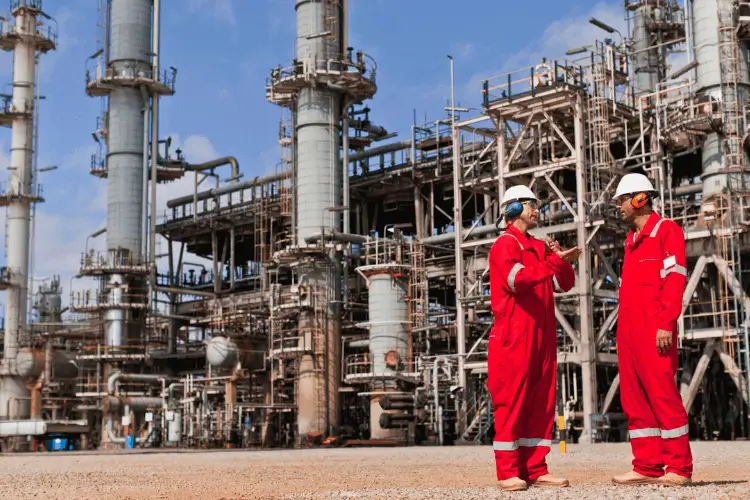
Half of the top ten largest oil refineries in the United States are in Texas. It is an industry fraught with potential hazards. When accidents occur at these massive facilities, the consequences can be catastrophic.
Many refinery workers, contractors, and offshore crew members perform dangerous jobs both on land and at sea. When explosions, equipment failures, or maritime accidents occur, injured workers may have rights under federal laws such as the Jones Act or general maritime law. If you or a loved one was hurt while working offshore or in connection with refinery operations, it’s important to understand your legal options. Oil refinery workers injured on the job may be entitled to compensation for medical expenses, lost wages, and long-term disability. The experienced legal team at The Krist Law Firm has been representing injured industrial workers for decades, helping them navigate the complex claims process and secure the compensation they deserve.
According to the U.S. Energy Information Administration, the top ten largest oil refineries in the U.S. include:
1. Marathon Galveston Bay Refinery
Located in Texas City, Texas, the Marathon Galveston Bay Refinery is the largest oil refinery in the United States, with a capacity of approximately 631,000 barrels per day (bpd). It processes a diverse slate of crude oils and produces gasoline, diesel, jet fuel, and other petroleum products.
2. Motive Port Arthur Refinery
The Motiva Port Arthur Refinery, located in Port Arthur, Texas, has a refining capacity of 626,000 bpd. It can process various types of crude oil, including heavy, light, and sour grades.
3. ExxonMobil Beaumont Refinery
The ExxonMobil Beaumont Refinery, located in Beaumont, Texas, has a refining capacity of around 609,024 bpd. It processes vast quantities of crude oil to produce various refined products, including gasoline, diesel fuel, jet fuel, and petrochemicals.
4. Marathon Garyville Refinery
The Marathon Garyville Refinery, situated in Garyville, Louisiana, has a capacity of about 597,000 bpd. It processes a wide range of crude oils and produces high-quality gasoline, diesel, jet fuel, and other products. It is equipped with advanced technology to maximize product yield, including hydrocracking and catalytic reforming units.
5. ExxonMobil Baytown Refinery
The ExxonMobil Baytown Refinery, located in Baytown, Texas, has a capacity of around 564,440 bpd. It is one of ExxonMobil’s key refining facilities globally and is highly integrated with ExxonMobil’s chemical plant, allowing for the efficient production of fuels and petrochemicals.
6. ExxonMobil Baton Rouge Refinery
The ExxonMobil Baton Rouge Refinery, located in Baton Rouge, Louisiana, has a capacity of approximately 522,500 bpd. Integrated with ExxonMobil’s chemical plant, it processes diverse crude oils and produces gasoline, diesel, jet fuel, and other products.
7. Citgo Lake Charles Refinery
Located in Lake Charles, Louisiana, the Citgo Lake Charles Refinery has a capacity of approximately 455,000 bpd. Its output includes crude oils, gasoline, diesel, jet fuel, and other products, utilizing hydrocracking and catalytic reforming units.
8. BP Whiting Refinery
The BP Whiting Refinery, located in Whiting, Indiana, has a capacity of around 435,000 bpd. It handles heavy Canadian crude and produces gasoline, diesel, and jet fuel, with advanced units for hydrocracking, catalytic cracking, and alkylation.
9. Marathon Los Angeles Refinery
Located in Carson, California, the Marathon Los Angeles Refinery has a capacity of around 365,000 bpd. It processes heavy and light crude oil and includes advanced units for hydrocracking, catalytic cracking, and alkylation.
10. Valero Port Arthur Refinery
The Valero Port Arthur Refinery, located in Port Arthur, Texas, is a significant asset within Valero Energy Corporation’s portfolio. With a refining capacity of approximately 360,000 bpd, it can process a variety of crude oils, including heavy and light grades, and produces gasoline, diesel, jet fuel, and petrochemicals.
