

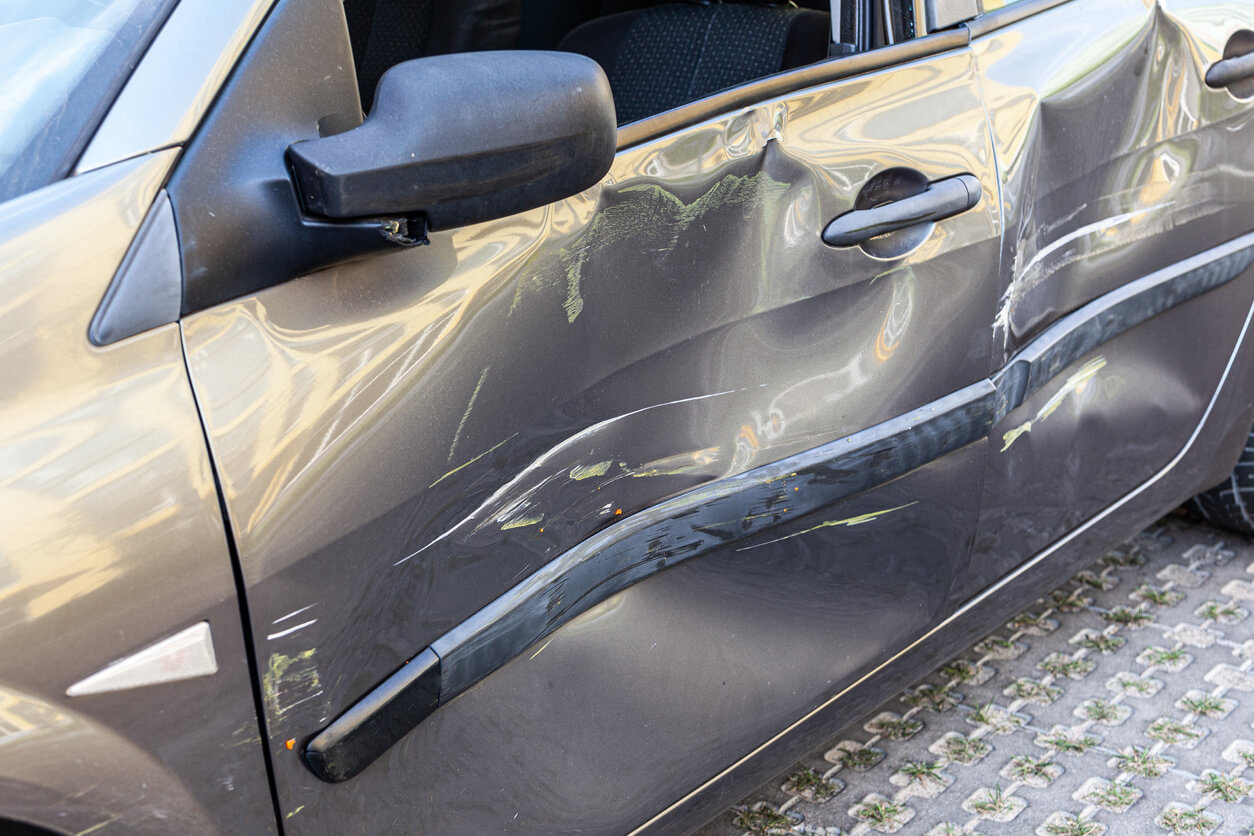
Any car accident can cause severe injuries, but a T-bone crash is especially dangerous. Usually occurring at intersections, a T-bone car accident happens when the front of one vehicle slams into the side of another. Anyone sitting inside either vehicle can be seriously hurt and left with substantial medical bills.
When you or a loved one are injured in a T-bone crash, contact an experienced Houston car accident lawyer right away. While a lot of people assume the vehicle that collides with you at this angle is always at fault, we know that is not always true. The Krist Law Firm P.C. can examine your case during a free initial evaluation and discuss your options.
Common Causes of T-bone Accidents
Most T-bone wrecks occur at intersections, which put vehicles crossing perpendicular, or at a 90o angle, to each other. When one driver fails to yield the right-of-way to another in intersections controlled by stop signs or stop lights, they can cause significant injury and damage. They may also face traffic citations and penalties.
There are a number of ways motorists may run into one another and cause these devastating crashes, such as:
- Driving while drowsy
- Driving under the influence of alcohol or drugs
- Driving recklessly
- Eating or drinking while driving
- Paying attention to a GPS or smartphone map
- Running a red light or stop sign
- Speeding
- Texting while driving
Other causes may come from bad weather, rough road conditions, mechanical failure, or confusing road signage in construction zones. Although negligent drivers are responsible for most T-bone accidents, there may be multiple parties at fault. A skilled car accident attorney in Houston can investigate your crash and hold everyone who is to blame accountable for your injuries and other losses.
Side-Impact Accidents: Who’s Responsible?
There are two common situations that lead to side impacts. Each is an example of how either driver could be at fault.
Side Impact Crash Scenario 1
A driver with the right of way collides with the side of another vehicle. In this situation, even though the driver actually broadsided the other, it is this second vehicle’s fault for violating the right of way. This type of crash happens when a person is lawfully driving through an intersection and the second vehicle runs a stop sign or red light.
Side Impact Crash Scenario 2
A driver without the right of way broadsides another vehicle. In this situation, the driver who crashed into the other vehicle is also at fault, as the vehicle that was broadsided had the right of way. This accident happens when vehicles run red lights or stop signs and collide with cars already and lawfully within the intersection.
These examples show there is no way to automatically tell which vehicle is at fault in a T-bone wreck. Side impacts require thorough investigations to determine which driver is responsible. This often depends on which driver had the right of way versus who disobeyed a traffic signal.
Other Potential At-Fault Parties
In some instances, the other driver may not actually be the one who caused the crash. Malfunctioning brake or gas systems, icy roads, wayward pedestrians or bicyclists, and road debris could all be the initiating factor in your car accident. Determining all liable parties takes a professional team that leaves no stone unturned in their search for who is to blame.
Our personal injury attorneys and legal staff investigate each case diligently to explore every option for financial compensation. We maintain a network of medical, reconstruction, and other experts to create a complete picture of what happened and who is at fault.
Proving Fault in A Houston T-Bone Accident
If you were injured in a side impact collision caused by another driver in Harris County, you need an attorney well-versed in finding substantial evidence and proving fault. Our team is skilled in accessing relevant sources of proof for personal injury claims and dealing with the local Houston courts.
At The Krist Law Firm, P.C., our lawyers will gather evidence and present it to compellingly prove fault on the part of the negligent party or parties. We will research and collect information such as:
- Dashcam and bystander video footage
- Information about the traffic light’s programming
- Medical bills
- Nearby business surveillance camera footage
- Photographs of the road conditions, including debris and skid marks
- Photos of traffic signals or signage
- Photos of the intersection
- Photos, scans, images, and tests related to your injuries
- Physical evidence from the vehicle
- Testimony from medical, accident, and other experts
- The police report
- The vehicle’s electronic data, if available
- Traffic camera footage
- Witness statements
Our auto accident attorneys will create a compelling story describing what happened, how you were hurt, and who is at fault. We will demonstrate how the defendant owed you a duty of care and failed in that duty. We will also prove how your injuries are a direct result of their negligence and that you have expenses related to the crash that must be repaid.
Recovering Compensation After a Car Crash
According to the Texas Department of Transportation, nearly 19,000 Texans sustained serious injuries after a car crash in 2022. Victims need help proving negligence when those accidents are someone else’s fault. With strong evidence that the other vehicle was at-fault for the accident that caused your injuries, you can pursue compensation for your physical, psychological, and financial losses.
More specifically, you can recover damages for:
- Anxiety, depression, and PTSD
- Disfigurement
- Emotional distress
- Loss of earning capacity
- Lost wages and benefits
- Medical costs
- Mental anguish
- Physical limitations
- Physical pain
- Property damage
Our experienced legal team can connect you with our network of medical and automotive experts. We ensure your injuries are properly diagnosed and treated and can obtain an estimate of your future medical costs. We also gather repair and replacement estimates for your vehicle so you are not left without a mode of transportation, which can affect your livelihood.
You have the right to seek repayment for all of your economic and non-economic losses. Anything with a fixed price, such as medical bills, is economic. Your subjective damages, such as your pain and suffering, are considered non-economic losses. Regardless of how much it is, you must be repaid for every penny of inconvenience, discomfort, and damage you experience after a negligent party causes you harm in a T-bone car accident.
Talk To a Houston T-Bone Accident Lawyer
Side-impact crashes often lead to significant injuries. You may be dealing with serious medical bills, pain, and being out of work. Your vehicle may also be totaled, and now you have to replace it while struggling financially.
This burden should not fall on you, and with our help, we can get what you deserve. Contact the experienced Houston personal injury lawyers at The Krist Law Firm, P.C. to learn about your rights and how to show the other driver caused you harm.
Let us gather evidence of fault and pursue maximum compensation under the law. Contact us to schedule a free consultation today.